
Close

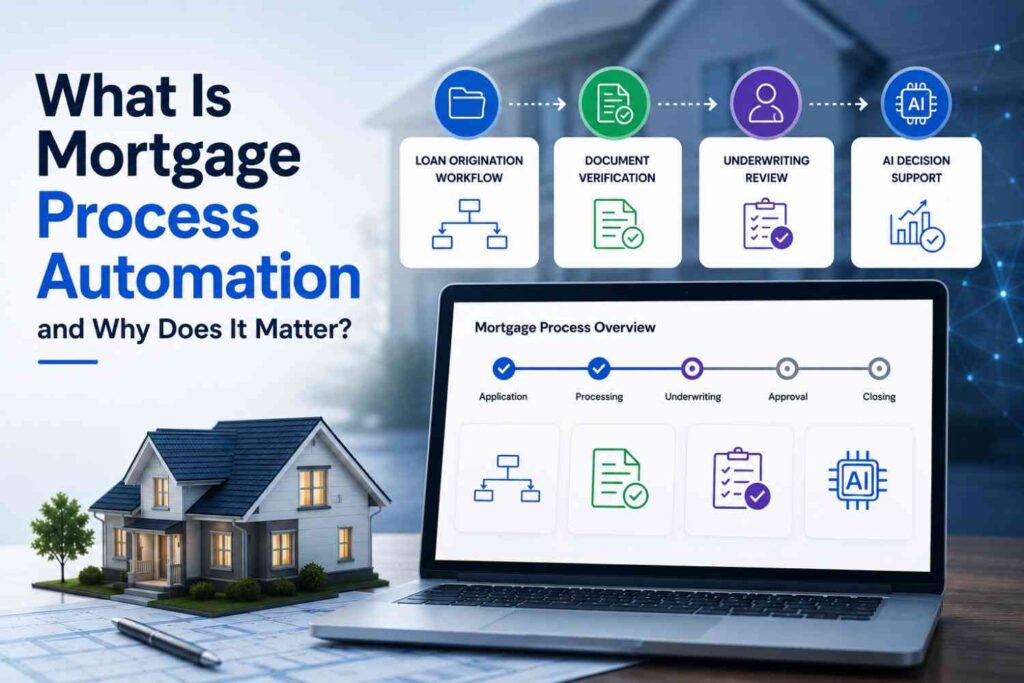
Ask anyone who’s worked a mortgage desk and they’ll tell you the same thing: there’s a lot of paperwork, a lot of compliance boxes to check, and a lot of waiting on other departments to do their part. None of that is going away anytime soon. But the manual side of it — the data entry, the chasing down documents, the back-and-forth emails — that’s where automation is making a real dent.
Lenders who’ve brought automation into their process aren’t cutting corners. They’re cutting wasted time. Fewer errors, faster approvals, and a borrower experience that doesn’t feel stuck in the past. Document handling, underwriting prep, status updates: automation touches all of it without sacrificing compliance.
At its core, mortgage process automation is technology doing the repetitive work so people don’t have to. Fewer spreadsheets and sticky notes, more software that actually talks to itself. Applications, documents, communications, approvals — it all moves through the system instead of through someone’s inbox.
A few stages this usually covers:
None of this is about replacing people. It’s about freeing them up. When the routine stuff runs itself, loan officers and processors get to spend their energy where it actually matters: talking to borrowers and making good lending decisions.
The simple version: information comes in, rules kick in, and the loan moves forward without someone manually pushing it at every step.
Say a borrower submits an application this afternoon. Automation can request the right documents, verify what comes back, update the file, and notify the right person the moment something needs a human decision. Nobody’s babysitting the process; it’s just happening.
Behind the scenes, this usually means connecting a loan origination system with a CRM, a document management tool, and some kind of workflow engine. When those pieces are actually wired together, not just sitting next to each other, information stops getting stuck. Pipelines get more visible, turnaround times shrink, and the whole operation feels less chaotic.
Every lender’s client database is a mess waiting to happen: duplicate contacts, stale notes, a referral that never got logged. Not because anyone’s careless, just because manual upkeep doesn’t scale.
Automation quietly fixes a lot of that. Every call, email, or status change can update the record on its own, trigger the right follow-up, and keep information consistent everywhere it lives.
What that actually buys a lender:
It also means a loan officer can pull up a borrower’s full history in seconds instead of digging through old emails. That kind of access doesn’t just save time, it makes the relationship feel more attentive.
Underwriting is where things tend to bottleneck. There’s a lot to review: financials, qualifications, risk factors, and guideline checks. Doing it all by hand takes time most lenders don’t have to spare.
Automation doesn’t replace the underwriter’s judgment, but it clears the runway. Systems can pull the documents that are needed, flag what’s missing, route files to the right reviewer, and surface red flags before they turn into delays.
There’s a consistency benefit too. Every time Workflow Automations follow the same rules which means fewer errors and an easier time staying compliant.
As loan volume climbs, that consistency starts to matter even more. Files move faster, underwriters get clearer status updates, and borrowers aren’t left wondering what’s happening with their loan.
Short answer: yes, and plenty already do. Automated underwriting systems weigh a borrower’s financial and credit information against lending guidelines and return a recommendation on eligibility and risk.
What lenders usually get out of it:
It works best, though, as one piece of a bigger picture, paired with workflow automation, solid document management, and software that actually connects to the rest of the lending process. On its own, automated underwriting helps. Combined with everything else, it changes how a lending operation runs.
Mortgage lending isn’t getting any simpler, but the way lenders manage applications, client data, underwriting, and day-to-day workflows is changing fast. Less manual grind, better information flow, fewer errors: that’s the practical upside of automation, and it shows up directly in the borrower experience.
Lenders who invest now in workflow automation and properly connected software are the ones who’ll keep up as volume grows and expectations rise. If you’re exploring what mortgage process automation could look like for your lending operation, Techniecode provides mortgage workflow automation, LOS customization, CRM integrations, and AI-powered underwriting solutions designed to help lenders work more efficiently.
It’s the use of software to handle repetitive lending tasks like document collection, compliance checks, and borrower communication. Instead of manual data entry across systems, automation connects everything so loans move through each stage faster and with fewer errors.
Automated underwriting systems evaluate a borrower’s financial and credit data against lending guidelines, then generate a recommendation on eligibility and risk. This speeds up decision-making while keeping evaluations consistent across every loan application a lender processes.
Mortgage process automation helps lenders reduce manual work, improve data accuracy, accelerate loan processing, and enhance borrower experiences. By automating workflows, document management, and communication, mortgage companies can increase operational efficiency while maintaining compliance and reducing processing delays.
No. Automation handles repetitive, rules-based tasks like document gathering and data verification, not judgment calls. Loan officers and underwriters still make the final decisions; automation just clears away the manual work that slows them down.